Thursday, 31 March 2011

"Not a friend of the Chinese people"

This is the reasoning, apparently, behind barring Tilman Spengler, German sinologist, and the man who gave the speech at the awarding of the Hermann Kesten award for "outstanding efforts in support of persecuted writers according to the principles of the Charter of International PEN" to Liu Xiaobo. All this, of course, links back to a discussion we were having a few weeks back about the impact of Chinese government policy on academic freedom.

Whilst I still think the accusations of espionage and propaganda against the Confucius institutes is overblown, this is a definite indication the Chinese policy is moving to punish academics for pronouncements made outside the country. It appears that in the future not only out-and-out political enemies of the CCP, but also their serious critics in the world of academia are to be refused entry to the country in an effort to discourage such criticism.

Finally, we have this entirely disreputable and unworthy comment from "China expert" Shaun Rein on this subject:

"My guess more bloggers/ academics who froth [at the] mouth about China will be denied visas going forward."


(My emphasis)

Mr. Rein then went on to characterise anyone who found this comment objectionable as an "idiot/troll". Sigh.

As other commenters have already pointed out, if any other world power were to adopt a similar position virtually no serious foreign scholars would be allowed entry.

[Edit: Fixed links to individual tweets - for anyone wondering how to link to a tweet, just click on the "x hours/days ago" tag under the tweet and it will take you the tweet's URL]

Monday, 28 March 2011

How to trash you country's rep world-wide . . .

. . . by having your country's police and immigration officials be rude and insulting to foreigners coming to visit it.

I've had my own run-ins with police who were just "trying to help foreigners" (AKA pointlessly wasting their time) when I was in Malaysia a couple of years back. I also had my parents nearly get barred from entry into the US because they had forgotten to take down my sister's address when coming to visit her (she was waiting in the arrivals lounge).

Still and all, last night when I was speaking to a friend of mine in the US whose Korean girlfriend recently flew in to visit him who had an experience which shocked even me. Here's what the immigration officials at LAX said to this nice young woman from a respectable, influential Korean family before allowing her into the country:

"Who's your pimp?"


My friend put in a complaint, but the complaint went nowhere, and he was told that he was "lucky they even let her in the country". Yes, he was lucky that they let his girlfriend, someone with no prior convictions and no prior engagement in illegal activity, a talented young lady who works as a designer, into the country because they suspected her of being a prostitute based seemingly only on her ethnicity.

Seriously, is this what America is about nowadays? Being pointlessly rude, insulting, sexist, racially stereotypical and demeaning to foreigners visiting the country?

Saturday, 26 March 2011

A Smoking Ban?


I find this BBC report of a ban on smoking in most public places in China to be brought in on the 1st of May a bit hard to credit.

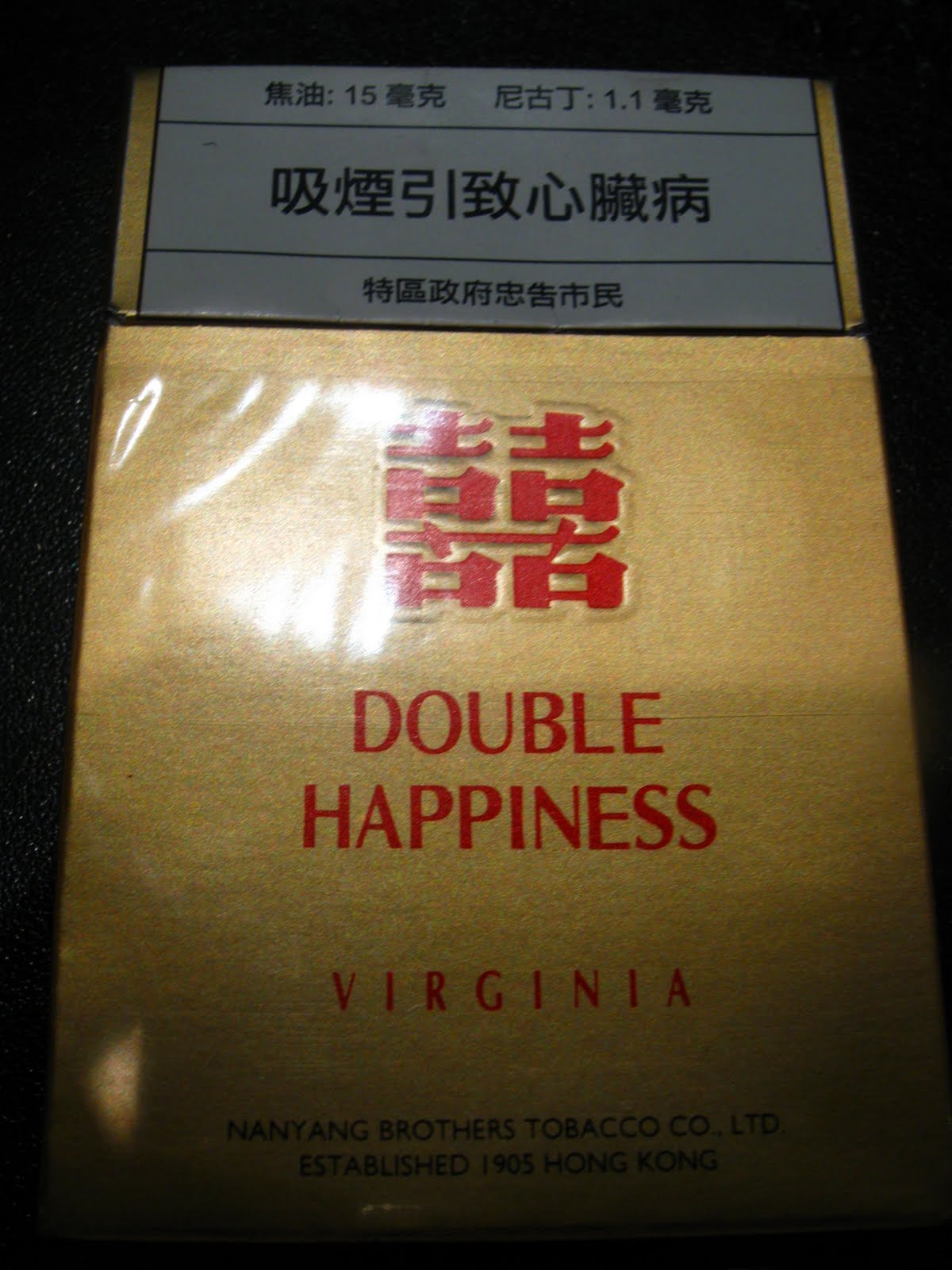
Anyone familiar with China will also be familiar with the all-encompassing pall of cigarette smoke that surrounds most restaurants and bars, particularly late at night. School campuses (see picture above) and hospitals are the one possible exception to this.

On top of this, smoking plays a role in social interaction which means it will be more difficult to introduce such a ban that it was in New York, or in the UK. It is a common gesture among men at least to offer cigarettes as a sign of friendship, and for a man to turn down such an offer is likely to cause a very mild degree of offence. Whilst I do not generally like offering up a saying as an indication of how an entire culture works, the popular Chinese saying "烟酒不分家" (my trans.: "neither alcohol nor tobacco divide a home" - although there are other interpretations) says a lot.

Will the Chinese really abandon smoking in pubs and clubs after the 1st of May this year? My guess is that this law will be enforced to about the same degree that Chinese laws on DVD piracy and prostitution are enforced - that is, not a lot.

[Picture: A pack of double-happiness cigarettes, apparently from Taiwan. Via Wikicommons.]

Chris Devonshire Ellis: a two-bit thug

Chris Devonshire-Ellis's campaign of emailed threats continues. In the latest email, after accusing me of attempting to hack his email account (I haven't) he had this lovely little message for me:

"Be careful when walking to work in Wroclaw we don't want any accidents do we. I'm watching you. So are my friends."


It amazes me that this man wasn't exposed for his fabrications and thuggish threats such as the one above much sooner.

Wednesday, 23 March 2011

Japan's "Liquidators"


Back in my student days there was general agreement that no-one could match the researchers from the former Soviet Union for their fearless approach to radiation risks. Whilst we wondered whether this wasn't just down to the stereotype of the vodka-guzzling "Crazy Ivan", we also knew that these were people from the same scientific and engineering community which had exhibited bravery of the highest and most commendable kind in the face of near-certain death during the Chernobyl disaster.

There are two instances of bravery amongst the "Liquidators" who rescued much of Europe from life-threatening irradiation which stand out the most. The first is the planting of a radiation sensor on top of the damaged reactor by Nicolai Melnik, for which he was named a Hero of the Soviet Union, and lived into a comfortable comfortable retirement in Spain despite having suffered ill-health. The second, and perhaps the greatest act of bravery I have ever heard of, is that of Alexei Ananenko, Valeri Bezpalov, and Boris Baranov, who reportedly donned diving suits and swam to their deaths through the highly radioactive pool of water that formed beneath the blazing core of Chernobyl's reactor No. 4 in order to release the water and thus avoid a thermal explosion far worse than that which had already occured.

When the situation at Fukushima began my thoughts, and those of many others, turned to the incredible risks that were being run by those fighting to prevent catastrophe at Fukushima. They are Japan's answer to Chernobyl's "Liquidators".

We must not go overboard, though. Despite the ridiculous messages issued by the British government as well as others urging their citizens to flee the Japanese capital, some 200 Kilometres from Fukushima, so far at most only three of the workers is reported to have suffered any harmful radiation exposure as a result of this disaster. According to the IAEA, no injuries have been caused by radiation. This is in contrast to the almost certainly fatal doses inflicted on nearly all of those who initially responded to the Chernobyl disaster. Fukushima is bad, but it is not yet that bad, and hopefully never will be.

Those working to save their country and its people from deadly contamination at Fukushima are deserving of high praise, and should receive all the support and gratitude that Japan and the world can offer once this crisis has finally been safely averted. This is the best way of rewarding their bravery.

[Picture: The central detail of the Soviet medal given to the Chernobyl Liquidators. Via Wikipedia.]

It's A Big Machine

The Tokyo City Philharmonic Orchestra (東京シティ・フィルハーモニック管弦楽団) under Taijiro Iimori (飯守泰次郎):


Yes, I know, Holst, which I'm sure marks me out as popular music-loving philistine, but one can't help but be impressed by the excellent and, for once, extremely visible precision of the orchestra in this piece. It is like watching a complicated military drill, or an aerobatic display team being put through its paces.

For those of more studied taste, here's the same orchestra under a different conductor playing a sparkling rendition of the 3rd movement of Prokofiev's Piano Concerto No. 3 in C major.

Tuesday, 22 March 2011

A mind-numbingly stupid move

I don't have much to say about the recent announcement that the UK is going to slash visas for students from outside the EEC other than to say that it is utterly stupid. Britain owes a great deal of its remaining influence in the world to its status as a centre for culture and education. Both benefit greatly form the influx of foreign students.

David Cameron's has pointed out on more than one occasion that Britain exports more to the Republic of Ireland than it does to the BRIC countries, and that this represents a missed opportunity for British business. Just how does he ever expect to tackle this if he is turning away hundreds of thousands of prospective customers from those very same BRIC countries with this idiotic policy?

Even the poor excuse of reducing immigration does not appear to be valid in this case, since the immigration that people truly object to is illegal immigration. Indeed, it is easy to see how this policy will increase illegal immigration by barring the legal kind.

Monday, 21 March 2011

The Third World War


Now, for only the third time during its 65-year history, the UN Security Council, the body notionally responsible for world security, has authorised direct military attack in support of one of its resolutions. However, this is quite different to the previous UN-authorised conflicts.

In Korea in 1950, the resolution authorising the deployment of forces under the UN banner was only possible because of the absence of the Soviet delegation, and was, at least initially, designed for the specific purpose of evicting the North Korean invaders from the south. In the case of Kuwait in 1990-1, the resolution was also clearly limited to actions necessary for liberating Kuwait.

In the present resolution, it is impossible to see any such clear limitations, or purpose to the resolution. The various parts of the Anglo-Franco-American alliance do not even seem to be clear as to who will be leading the coalition, what its objectives are, or even what the resolution authorising their action actually authorises. The Americans are talking only of a no-fly zone, whilst the first act of the French was to carry out strikes against tank columns. Whilst the only thing that is explicitly barred by the resolution is an occupation of Libya, even this does not seem to explicitly prevent an invasion of the country.

Moreover, once the present coalition has done what it can to protect the rebel-held cities of Benghazi, Misrata, etc., what happens then? Most obviously, now that we are in we should do what we can to help the rebels overthrow Gaddafi and resolve the situation - yet no-one has come forth to say this or even imply it. Regime change is the logical conclusion of the previous resolution referring the Gaddafi government to the International Criminal Court, yet this is not recognised.

This is, of course, not only the third UN-authorised military action, but also the third military action by the Western Powers in a majority Muslim country in the last ten years. If this conflict is resolved quickly, if Gaddafi is overthrown quickly and the Libyans left to solve their own problems, then we may at least be assured that another quagmire like Afghanistan will have been avoided. Unfortunately this is far from certain.

[Picture: A Tomahawk missile is launched from the USS Stetham, 2004. Via Wikicommons]

Wednesday, 16 March 2011

My Stalker: Chris Devonshire Ellis

Back when Chris Devonshire Ellis resigned, I said that so long as I heard no more of CDE harassing and threatening bloggers who pointed out that he did not have any of the qualifications he claimed to have, that would be the last I would write about him. Even when it turned out that he hadn't properly resigned, I made it clear that I wasn't going to write any more posts on the guy. When the weird campaign of spreading my identity all over the internet started, I still tried to keep an open mind as to the identity of my pursuer despite my stalker's familiar writing style.

Until today, when I received this email in my work email in-box:

"Dear Mr. Grundy;

Just to remind you that according to Charles, our Private Investigator, you have a 5pm deadline to keep today as regards removal of offensive and defamatory material from your website.

I suggest you do, and if so, we'll say no more about this issue between you and I. You've had your fun, now it's time for you to move on and stop this constant bothering and sullying of my name.

Yours sincerely;

Chris Devonshire-Ellis

Principal

Dezan Shira & Associates

Beijing"


Who was this "Charles" of whom CDE spoke? Well, on Sunday I received this bizarre, rambling, and threatening email from the address "charlespi@hotmail.co.uk":

"Mr. Grundy

My name is Charles & I am a private investigator. You know me as 'anonymous' on your blog. I act as a go between on behalf on a group of four individuals. They have engaged me to establish your identity and to make contact with you. This concerns various comments and statements you have made on your blog & on those of others. I have now made you aware that I can track you down & also your colleagues family & friends. I also have records of your addresses in Brighton & Lansing full details of your movements throughout Asia & the people you met with professionally. I can stretch this further & add in contacts within the UK & immigration worldwide for your immigration & passport details. I can now find you & keep track of where you are. The question is what happens next. You are instructed to immediately delete from your website all references to the people you have harrassed online within the next 48 hours. Lets not have you getting smart asking who or what. Use your sense. I have a list of your comments & I will be watching. Take everything down & delete it. This means a deadline of close of business 5pm GMT on Tuesday 15 March. You are asked to do the same for references of the websites of Wang Jiangshuo & Rhondo Zeb. It is your problem if these sites are not under your control. If you comply with this request & abstain from making any further references to any of the individuals concerned no further action will be taken against you. If not then actions will be taken & this will involve your employers & other means that will not be to your amusement at my disposal. I have contacts in many places & Wroclow is a text away. There are no negotiations. It is better for you that it is not necessary to meet with any of my friends. That would not be a good idea. Do not piss me off or them off & we can bid goodbye & let all your bad behaviour be history.
Charles"
(my emphasis)

A quick check shows that there is no registered UK private investigator by the name of "Charles Pi", nor can any record be found of one in another country. None of the three UK private investigator's called Charles on the ABI registry know who Devonshire Ellis is or have had any contact with him. The most obvious explanation is therefore the simplest - "Charles Pi" is an alias.

CDE doesn't bother to identify what on this blog he considers "offensive and defamatory". Once again, the reason for this simple - nothing here is "defamatory", if it were he could have had the relevant material taken down years ago. Instead, CDE is trying to take down bona fide commentary on this blog through a campaign of thinly veiled threats against my friends, family, and job such as those highlighted above. He admits as much in his email.

I have not "defamed" him. Instead it is his own words that condemn him, now as before. Moreover, it is now Wednesday evening and the sky is yet to fall in, despite the 5 PM Tuesday deadline.

It seems that CDE is not merely in another time zone, but on a different planet all together.

Tuesday, 15 March 2011

Fukushima and the future of nuclear power


Back in university I wrote an essay on safety and nuclear power. Basically my analysis was that a water-cooled reactor could never melt-down under conceivable circumstances, that 3-Mile Island only suffered partial meltdown because of a series of avoidable accidents, and that an accident that knocked out both the primary and back-up cooling systems would probably also destroy the reactor and was therefore not worth worrying about.

I also wrote that Chernobyl exploded because it was basically a bomb - the graphite blazed out of control after the initial melt-down, no-one would build another reactor like that in the future. The conclusion was that another major nuclear accident like Chernobyl was almost impossible.

Yes, I know Fukushima hasn't gone into full meltdown yet, and the reactor vessels are, as far as we know, still in tact. However, the circumstances I described as being inconceivable have occurred - an accident bad enough to knock out the cooling systems, but not so bad as to destroy the reactor. Moreover, if explosions can tear reactor containment buildings apart in the way they did at Fukushima, the reactor itself can also be destroyed, and the fuel spread over a large area in just the same way the Chernobyl explosion did. It didn't happen, or at least it hasn't yet, but it could have.

I'm a long-term supporter of nuclear fission power, but I also think that this accident should at the very least give the supporters of nuclear fission food for thought. There are reactor types at the experimental stage, such as inert gas-cooled reactors which should not be vulnerable to the chenical explosions that tore apart Chernobyl and the Fukushima reactor buildings. This won't eliminate the low risks associated with spent nuclear fuel though.

On the other hand, the German government's de-activation of seven of the seventeen nuclear reactors in Germany is a ridiculous over-reaction.

[Picture: A satellite picture of the explosion at the Unit 3 containment building at the Fukushima I plant. Picture made available by DigitalGlobe under a CC-by-ND-NC 2.0 license.]

Friday, 11 March 2011

My Name Is Gilman Grundy


Hi there. For a long time I've been blogging using a handle (FOARP), but because someone's gone and revealed my identity, from now on, whilst I'm going to keep using the handle because I guess it's what people are most familiar with, you'll also be able to know exactly who I am.

A few things about me that some may find interesting:

- Whilst I think "fluent" is one of the most abused languages in the English language, my Chinese is at what they call "business-level", which means I can take part in meetings, give presentations, translate documents etc. in Chinese without embarassing myself too much.

- I work in IP, a career that has taken me from China to London to Japan to Poland, and which I greatly enjoy.

- I'm a big fan of Liverpool F.C.

- I once came second in a television song competition watched by millions, despite my blatant attempts at vote-rigging.

- I'm very interested in the connection between IP and competition law, something that no person who I have ever met was actually interested in.

You can read an interview with me here.

[Picture: Me giving a talk on the European Commission's decision in the Microsoft case at the EIPIN conference in Gerzensee, Switzerland, 2008]

Japan Earthquake


Probably just like most of you I have spent this morning doing little work and gaping, open mouthed, at the video feeds coming from Japan. It is a well-worn cliche that Japan is a politico-socially stable society in a geologically unstable area, but nothing brings home the sheer power and force of this earthquake like the footage of houses, ships, trucks, and towns being lifted and smashed by the force of the tsunami generated by the quake. It is simultaneously deathly horrifying and shockingly astounding. Living in Taiwan and Japan I adopted a blasé attitude to earthquakes, but it will be hard for me to be so cold-blooded ever again.

For the moment, I merely thank god (or whoever) that everyone I know in Japan and Taiwan (which the tsunami also hit) is safe and well. The dead are only just being counted, but it is hard not to believe that they will greatly exceed the 6,434 people killed in the 1995 Kobe earthquake, although modern construction should ensure that the toll will not approach the 100,000 killed in 1923 Great Kanto quake.

[Picture: An earthquake-damaged refinery blazes out of control in Ichihara, Chiba Prefecture. Picture taken by Danny Choo and made available on a CC-by-SA license, 11th of March 2011]

Wednesday, 9 March 2011

Global Times on Charlie Sheen: Pure, concentrated awesomeness


Global Times (no, really, Global Times) runs with an awesome piece criticising Charlie Sheens recent drug/ego/craziness-inspired going-off-the-rails gonzoism for its lack of filial piety. Yes, at first I was a bit dubious, the opener almost could be a bona fide GT agit-prop editorial, but the more you read into the piece, the more awesome it becomes. The name of the editorialist is also a bit of a giveaway. Go there now and read it before it goes the way of Ask Alessandro.

[Picture: Not the editorialist being mobbed by crazed fans. Via Wikicommons]

Sunday, 6 March 2011

China's defence spending up by 12.7%


When the Chinese government announced last year that defence spending might rise by only around 8% I was among those cautiously optimistic that this might signal a slacking-off of the break-neck speed with which the PRC has been improving its military capabilities. However, it seems I was being a tad over-optimistic. This report from the Guardian does a good job of covering all the angles.

Now, as the Guardian report points out, despite the fact that the US (which outspends the rest of the world combined on defence) is reducing its budget, there are a few justifications for this increase. The first, and most obvious, is that China's defence spending, though high compared to many of its neighbours, is still low in comparison to overall GDP at around 1.5% of nominal GDP, and that as China's economy is growing quickly high increases in military spending should be expected. The second is that even though the US is cutting spending, regional rival India is planning an 11.6% defence spending hike.

Still, in the long term these increases, which have out-stripped GDP growth, will give the Chinese military a decisive advantage over all of its neighbours, or any likely combination of them. Whilst official yearly Chinese spending is now around 91.1 billion US dollars, 2009 military spending in South Korea, Japan, and Taiwan totalled roughly 84 billion USD. In fact this year's declared increase in Chinese military spending is equivalent to the entirety of the Taiwanese military budget. Only the commitment of the United States to the defence of Japan South Korea, and Taiwan would give them an edge.

[Picture: Smoke comes from the funnel of the former Soviet aircraft carrier Varyag, now said to be re-named Shi Lang, which is under renovation in Dalian Harbour. Sources suggest it may begin sea trials with the People's Liberation Army Navy as early as the end of this year. Picture via Defensetech]